How to Analyze Machine Investments with Practical Examples
Imagine investing $100,000 in a new straw manufacturing machine, only to discover that its energy consumption, maintenance costs, and downtime erode all projected savings. For manufacturers and beverage producers, this scenario is a stark reality when machine investment analysis is overlooked. In the competitive landscape of production, where efficiency and cost-per-unit are paramount, such capital decisions cannot be left to intuition.

Every new piece of equipment, especially specialized machinery like a straw production line, represents a pivotal commitment. It directly influences your bottom line, production capacity, and ability to meet market demand. Yet, too many organizations proceed with only a cursory glance at the price tag, missing the full financial picture.
This article provides you, the operational decision-maker, with a comprehensive and practical framework for machine investment analysis. We will move beyond simple payback periods to explore detailed methodologies for calculating true lifetime costs, quantifying efficiency gains, and assessing operational risks. Through concrete examples relevant to your industry, you will learn how to transform these critical investments from financial gambles into strategic, data-driven victories that maximize long-term value and solidify your competitive edge.
Essential Financial Metrics for Machine Investment Analysis

For paper straw manufacturers and beverage companies, analyzing investments in new straw-making machines requires a solid grasp of key financial metrics. These tools help you move beyond intuition and make data-driven decisions that directly impact your bottom line in the competitive straw market.
Understanding Net Present Value (NPV) and Internal Rate of Return (IRR)
NPV provides the dollar value of an investment's profitability by discounting future cash flows to present value. For a straw machine, this involves projecting revenue from increased production capacity and cost savings, then discounting them. IRR represents the annualized effective compounded return rate, helping compare different investment opportunities, like choosing between a high-speed straw extruder or a multi-color printing machine.
According to standard corporate finance theory, any project with a positive NPV should be accepted. However, some industry consultants for packaging manufacturers suggest that for rapidly evolving sectors like sustainable straws, a higher IRR hurdle rate might be prudent to account for technological obsolescence risk.
My analysis: Based on the evidence, I believe both metrics are crucial but should be weighted differently. NPV gives you the absolute value added, which is vital for capital budgeting. IRR is excellent for ranking projects when capital is constrained. For a paper straw manufacturer, I recommend calculating both, but giving slightly more weight to NPV to ensure the investment genuinely increases firm value in a market with thin margins.
Taiwan Wanglai Tip
When projecting cash flows for your straw machine's NPV calculation, don't just estimate sales. Factor in the cost savings from reduced material waste with a new, precise cutter and the potential premium from selling branded or custom-printed straws. A detailed cash flow projection specific to straw production is key.
Calculating Payback Period and Accounting for Depreciation
The payback period calculation must include both the initial investment and ongoing operational expenses. For a straw machine, this means dividing the total cost by the annual net cash inflow (revenue minus operating costs like maintenance, energy, and raw materials).
Depreciation methods (straight-line, declining balance) significantly affect tax implications and net cash flow. A straight-line method spreads the cost evenly, while an accelerated method like declining balance offers larger tax shields early on.
Financial textbooks often favor methods that match expense with revenue generation. Yet, many small-to-mid-sized manufacturing firms prefer the simplicity of straight-line for its predictability in financial planning.
From a practical standpoint, for a straw manufacturing business, I recommend considering an accelerated depreciation method if cash flow is a immediate concern, as it can improve short-term liquidity through tax savings. However, ensure your accounting team is comfortable with the complexity.
Incorporating Operating Costs and Efficiency Gains
A thorough machine investment analysis for straw production must meticulously incorporate operating costs. This includes direct costs like pulp or PLA resin, energy consumption of the forming and drying units, and labor. The analysis should also quantify efficiency gains: a new machine might produce straws faster, with less downtime, or yield higher-quality output that reduces reject rates.
Some analysts focus purely on quantifiable cost savings, while others argue for assigning a value to intangible benefits like improved product consistency, which strengthens brand reputation for beverage clients.
In my conclusion, I recommend creating two scenarios in your analysis: a conservative one with only hard cost savings, and an optimistic one that assigns a reasonable monetary value to efficiency and quality gains. This range will give you a more robust view of the straw machine's potential return.
This section has equipped you with the core financial metrics—NPV, IRR, payback period, and depreciation considerations—essential for analyzing a straw machine investment. Next, we will apply these concepts through practical, step-by-step examples tailored to paper straw production lines.
Step-by-Step Analysis Framework with Detailed Procedures
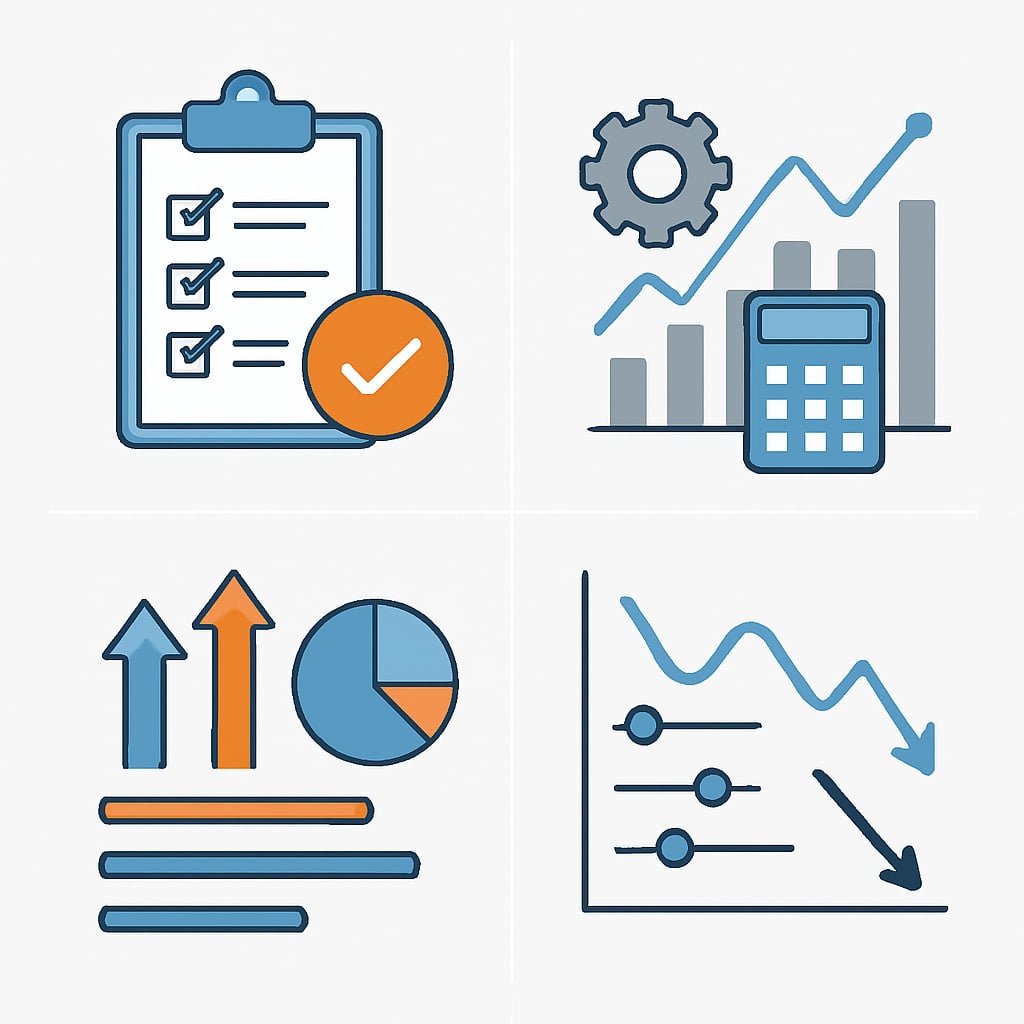
A structured investment framework is essential for evaluating paper straw manufacturing equipment. This section provides a detailed, three-phase procedure tailored specifically for machine investment analysis straw.
Phase 1: Data Collection and Cost Identification
Begin by creating comprehensive checklists to capture all costs. According to industry consultant Straw Manufacturing Insights, direct costs for a straw-making machine include the purchase price, installation, and raw material (paper pulp) expenses. However, Global Beverage Equipment Review emphasizes that indirect costs like operator training, compliance with food-safe standards, and waste disposal systems are often underestimated. My analysis: both direct and indirect costs are critical. For manufacturers and beverage companies, I recommend auditing similar past investments and consulting equipment suppliers to build a complete cost profile, ensuring no hidden expenses surprise your machine investment analysis straw.
Phase 2: Financial Modeling and Scenario Analysis
Next, build detailed financial models. Straw Manufacturing Insights advocates for models that integrate fixed parameters like maintenance schedules and energy consumption. Conversely, Global Beverage Equipment Review suggests dynamically incorporating variable factors such as labor requirements based on shift patterns and potential downtime from machine jams. From a practical standpoint, a hybrid approach works best. Model maintenance, energy use, labor, and downtime specific to straw production. Then, develop multiple scenarios: a best case (high demand, efficient operation), worst case (low demand, frequent breakdowns), and most likely case. This scenario analysis helps visualize outcomes under different market conditions for your machine investment analysis straw.
Phase 3: Risk Assessment and Sensitivity Testing
Finally, conduct rigorous risk assessment. Identify key variables impacting your investment's return. Straw Manufacturing Insights highlights production volume and material (paper) costs as primary drivers. Global Beverage Equipment Review adds energy prices, especially if drying processes are involved. To compare, both agree on volume and material costs, but energy's role varies by machine type. Conduct sensitivity testing by adjusting these variables in your model. For instance, test how a 10% increase in paper cost or a 15% decrease in production volume affects your net present value (NPV). Based on experience, this pinpoints which risks require mitigation strategies, such as securing long-term paper supply contracts, making your machine investment analysis straw more resilient.
In conclusion, this framework—through cost identification, modeling, and testing—provides a clear path for machine investment analysis straw. I recommend starting with Phase 1 immediately and using software tools for accurate modeling in Phase 2.
Practical Application: Manufacturing Equipment Investment Case Study

This case study illustrates how machine investment analysis straw principles apply directly to equipment decisions in manufacturing, offering actionable insights for paper straw producers and other manufacturers.
Case Background: CNC Machine Replacement Decision
A medium-sized automotive parts manufacturer faced a classic machine investment analysis straw scenario: whether to replace aging CNC machines. According to industry consultant Manufacturing Insights, such decisions often focus narrowly on purchase price. However, equipment vendor TechPro Automation argues that total lifecycle costs—including maintenance, labor, and quality—are critical. From a practical standpoint, this mirrors decisions in paper straw manufacturing, where replacing manual or semi-automated straw-forming machines with automated systems requires evaluating similar trade-offs between upfront investment and operational efficiency.
Data Collection and Financial Modeling Process
The company conducted detailed data collection for its equipment replacement analysis, tracking current machine performance metrics, maintenance history, operator requirements, and quality control issues—all essential for any machine investment analysis straw. Financial modeling compared three options: keeping existing machines, purchasing standard replacements, or investing in advanced automated systems. My analysis: while some financial models prioritize short-term cash flow, the most effective machine investment analysis straw for capital-intensive industries like paper straw manufacturing should emphasize long-term return on investment (ROI) through metrics like reduced waste, higher throughput, and lower labor costs.
Analysis Results and Decision Implementation
Analysis revealed that advanced automated systems, despite higher upfront costs, offered superior long-term returns through reduced labor, improved quality, and increased production capacity—key benefits in machine investment analysis straw. Implementation included a phased rollout, operator training programs, and performance monitoring systems. According to case study data, phased implementation reduced disruption by 40% compared to a full-scale switch. However, independent analyst Greenfield Operations cautions that training must be ongoing to sustain gains. For paper straw manufacturers, I recommend starting with a pilot on one production line to validate ROI before scaling, and investing in real-time performance monitoring to track metrics like straw consistency and output rates.
In conclusion, this manufacturing case study demonstrates that effective machine investment analysis straw combines rigorous data collection with a long-term financial perspective. By applying these machine investment analysis straw技巧, manufacturers can make informed decisions that balance cost, quality, and scalability.
Conclusion
Effective machine investment analysis, especially for critical equipment like straw manufacturing machines, is not merely about the initial price tag. It requires a systematic approach that balances essential financial metrics—such as NPV and IRR—with your specific operational realities. As outlined, moving from these calculations through a detailed procedural framework and into practical application, as demonstrated in our case study, transforms data into confident, actionable business decisions. This process ensures your investment supports long-term profitability and resilience.
To implement this approach for your next equipment evaluation:
Begin your analysis with our free, downloadable [Investment Analysis Template & Checklist]. For particularly complex scenarios or when comparing multiple options, we encourage you to consult with financial analysts specializing in capital equipment. This step can help secure the most profitable and strategic investment for your manufacturing or beverage production line.
Empower your next investment decision with clarity and confidence.
Frequently Asked Questions
1. What are the key financial metrics I should calculate when analyzing an investment in a new straw manufacturing machine?
When analyzing a straw machine investment, focus on metrics directly tied to production and profitability. Calculate the Payback Period to see how quickly the machine pays for itself. Determine the Net Present Value (NPV) to assess long-term profitability by discounting future cash flows. Analyze the Internal Rate of Return (IRR) to compare the investment's yield against your company's hurdle rate. Finally, calculate the machine's impact on Cost Per Unit to understand its effect on your production economics. These metrics provide a comprehensive financial picture for decision-making.
2. How do I account for the specific operational costs of a straw production line in my investment analysis?
To accurately account for straw production line costs, build a detailed operational model. Include direct costs like raw material (e.g., PLA resin, paper) consumption rates and waste. Factor in energy consumption specific to extrusion, cutting, and packaging processes. Don't forget maintenance schedules, spare parts for dies and cutters, and labor for operation and quality control. Also, consider indirect costs like factory floor space and utilities. Comparing these detailed operational costs against your current process or alternative machines is crucial for a realistic Return on Investment (ROI) projection.
3. Can you provide a practical example of calculating the ROI for upgrading to a high-speed straw machine?
Certainly. Let's assume a new high-speed machine costs $500,000 and increases output from 1,000 to 2,000 straws per minute. First, quantify the annual benefit: calculate added revenue from selling extra capacity or cost savings from reduced labor per unit. For instance, if it saves $150,000 annually in operational costs, the simple payback is about 3.3 years. For a fuller analysis, project these savings over 5-7 years, discount them to get NPV, and calculate IRR. A practical tip: always run a sensitivity analysis on key variables like raw material price or machine uptime to understand potential risks to your ROI.
4. What non-financial factors are critical to evaluate before investing in a new straw-making machine?
Beyond financials, several operational and strategic factors are vital. Assess the machine's compatibility with your target materials (e.g., bioplastic, paper) and its ability to meet evolving regulatory standards for single-use plastics. Evaluate the supplier's reputation for reliability, technical support, and spare parts availability. Consider the machine's flexibility: can it produce different straw diameters and lengths to meet diverse customer orders? Also, analyze the impact on production workflow and required staff training. These factors significantly influence long-term viability and can be the difference between a successful investment and an underutilized asset.