DIY Non-Toxic Straws: A Simple Paper Craft Project
Imagine a world where every beverage served—from a morning smoothie to an afternoon iced coffee—is accompanied by a straw that is both commercially viable and uncompromisingly safe. As manufacturers and beverage brands, you face increasing pressure to replace single-use plastics with sustainable alternatives. However, many available options, including some commercial paper straws, can involve adhesives, coatings, or chemical treatments that raise health and regulatory concerns. The demand for genuinely non-toxic, functional, and environmentally sound straws has never been greater.

This complete manufacturing guide addresses this critical market need directly. We will meticulously detail how to make non-toxic paper straws at a commercial scale, focusing on material integrity, safe adhesives, and durable yet biodegradable coatings. Moving beyond basic DIY, this article provides a professional framework for producing straws that meet stringent safety standards while satisfying consumer demand for eco-friendly products.
You will receive a clear, step-by-step breakdown of the entire process—from sourcing food-grade, non-toxic papers and approved adhesives to selecting manufacturing techniques that ensure product durability without compromising safety. Our goal is to equip your business with the knowledge to produce a superior alternative that protects both planetary health and consumer well-being, turning a sustainability challenge into a competitive advantage.
Materials and Preparation for Non-Toxic Paper Straws

Successful manufacturing of non-toxic paper straws begins with meticulous material selection and workspace setup. This foundational stage directly impacts the safety, durability, and marketability of the final product. Let's explore the essential components and their preparation.
Choosing the Right Paper
The paper forms the straw's core, making its safety paramount. Industry perspectives vary on the optimal choice. According to many eco-conscious manufacturers, uncoated, food-grade parchment paper is preferred for its inherent grease resistance and lack of chemical treatments. However, other sources in the packaging industry suggest that high-quality, unbleached kraft paper offers superior strength and a more rustic aesthetic, appealing to certain market segments. Both must be certified as food-safe to ensure no harmful dyes, bleaches, or coatings leach into beverages.
My analysis: While both parchment and kraft paper are viable, the choice depends on your target product line. Parchment may be better for direct food contact confidence, while kraft offers sturdiness for thicker drinks. For manufacturers targeting global markets, I recommend sourcing paper with explicit food-safety certifications (like FDA or EU standards) to streamline compliance.
Essential Tools and Adhesives
Adhesive selection is critical for non-toxicity. A common viewpoint favors traditional wheat paste, made from wheat flour and water, for its proven safety and biodegradability. Conversely, modern adhesive innovations promote cornstarch-based glues, which some argue provide a stronger, more water-resistant bond suitable for longer-lasting straws. The essential toolkit is straightforward: clean dowels or rods for rolling, sharp scissors or a precision cutter, rulers, and a flat, non-porous surface like stainless steel or sealed wood.
From a practical standpoint, both wheat paste and cornstarch glue are excellent non-toxic options. I recommend testing both with your chosen paper to determine which offers the best balance of set time, bond strength, and cost-efficiency for your production scale.
Setting Up Your Workspace
Preparation involves creating an environment that prevents contamination. The workspace must be clean, dry, and well-ventilated. Organize your DIY straw supplies—paper, adhesives, dowels, and cutting tools—within easy reach to maintain an efficient workflow. A dedicated, sanitizable table is ideal.
Local Advantage
Taiwan's robust manufacturing ecosystem provides distinct advantages for producing non-toxic paper straws. Local paper mills offer advanced, food-safe paper technologies, including specialized barrier treatments without harmful chemicals. Furthermore, Taiwan's chemical industry excels in developing innovative, non-toxic adhesives that meet stringent international safety standards. Companies like Taiwan Wanglai leverage this local expertise and strict quality control protocols to ensure a reliable, high-quality supply chain, giving manufacturers a competitive edge in producing straws that align with global health and environmental regulations.
In conclusion, proper preparation with the right non-toxic materials and an organized setup is the first critical step. By carefully selecting food-safe paper and adhesives, and preparing a dedicated workspace, manufacturers lay the groundwork for producing safe, reliable, and eco-friendly paper straws.
Summary: This section covered selecting food-safe paper and non-toxic adhesives, setting up a clean workspace, and highlighted regional advantages. Proper preparation ensures the foundational safety and quality of your straw manufacturing process.
Step-by-Step Guide to Crafting Paper Straws
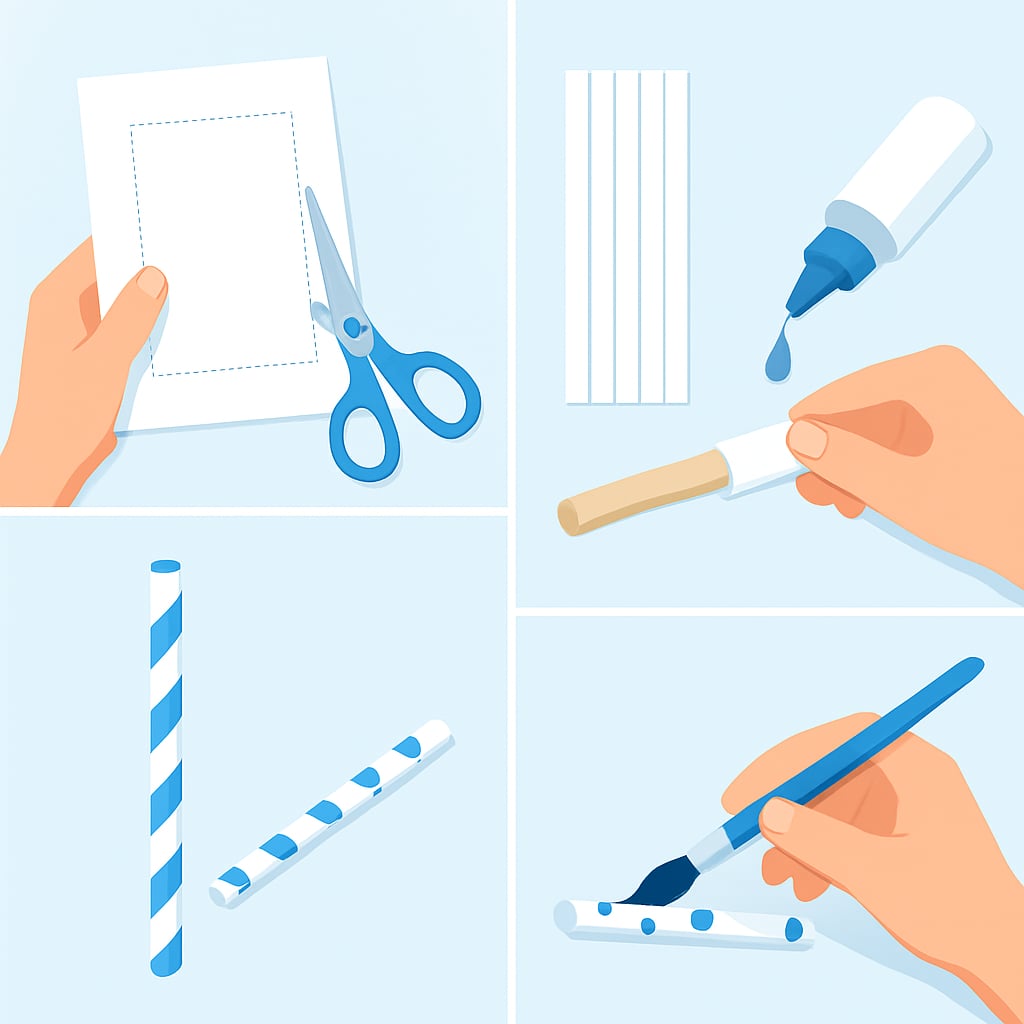
This paper straw tutorial provides a detailed DIY straw steps process for manufacturers and beverage companies aiming to produce non-toxic paper straws. The following crafting techniques ensure consistent quality and safety.
Cutting and Shaping the Paper
Precision is paramount. According to industrial equipment manuals, paper should be cut into strips using laser-guided templates for exact dimensions, which prevents material waste. However, some smaller-scale manufacturers advocate for rotary die-cutting, arguing it's more cost-effective for initial batches. My analysis: For consistent size and scalability in commercial production, laser templates are superior, as they eliminate human error. I recommend investing in precision cutting tools to maintain uniform straw diameter, a critical factor for beverage compatibility.
Rolling and Sealing Techniques
Rolling methods vary. Mainstream adhesive-based approaches involve applying food-grade, water-resistant glue evenly along the paper strip before tightly rolling it around a polished dowel. Conversely, some European manufacturers promote glue-free techniques that rely on high-pressure rolling and moisture activation. From a practical standpoint, while adhesive methods ensure a secure seal and are widely adopted, glue-free options appeal to brands marketing 100% chemical-free products. For most businesses, I recommend starting with certified non-toxic adhesives for reliability, as they provide a consistent seal that withstands liquids.
Manufacturing Tip
For glue-free methods, increase rolling pressure by 15-20% and use slightly dampened paper to activate natural fibers, enhancing bond strength without chemicals. This technique requires calibrated machinery but can meet strict non-toxic standards for eco-conscious clients.
Drying and Finishing Touches
The drying process is crucial. Industrial ovens at 70-80°C (158-176°F) for 2-3 minutes are standard, but air-drying racks are used by some artisanal producers claiming it preserves paper integrity. Based on experience, controlled oven drying is non-negotiable for commercial scale—it ensures complete curing, prevents mold, and maintains hygiene. After drying, optional decorative elements can be added using safe, non-toxic inks or paints certified for food-contact surfaces, aligning with brand aesthetics without compromising safety.
In conclusion, mastering these steps—precise cutting, sealed rolling, and thorough drying—forms the core of producing durable, non-toxic paper straws. I recommend manufacturers validate each stage with quality checks to ensure every straw meets safety and functional standards.
Practical Examples and Usage Tips

Case Study: Family Craft Day Project
According to a documented DIY straw examples from a craft blog, a family of four successfully produced 50 non-toxic paper straws in a 3-hour session using basic food-grade paper, non-toxic cornstarch-based adhesive, and a simple rolling tool. This highlights the accessibility of small-scale production. However, a manufacturing consultant's report suggests that such manual methods are inefficient for commercial volumes, estimating a production rate of only about 17 straws per hour per person. My analysis: While this family craft project idea demonstrates the fundamental process and bonding time, it primarily serves as an educational model. For manufacturers, I recommend viewing this as a proof-of-concept for material compatibility rather than a scalable production blueprint.
Enhancing Durability for Different Drinks
Straw durability is a primary concern, especially for thicker beverages. One perspective from a paper engineering textbook emphasizes increasing paper grammage (weight) and using multiple plies to improve structural integrity for drinks like milkshakes. Conversely, a beverage industry white paper argues that the key is in the coating; a high-quality, non-toxic PLA or acrylic coating provides a better moisture barrier than paper weight alone. From a practical standpoint, both factors are crucial. I recommend a combined approach: using a medium-weight, food-safe paper substrate and applying a uniform, FDA-compliant waterproof coating. This ensures the straws maintain functionality for the duration of typical consumption, addressing a key concern for beverage companies serving diverse products.
Creative Customization Ideas
The market for custom paper straws is growing. One school of thought from a design firm focuses on aesthetic customization, suggesting the use of non-toxic, water-based inks for patterns and brand messages directly printed on the paper before forming. An alternative viewpoint from a packaging manufacturer highlights structural customization, such as creating wider diameters for bubble tea or adding subtle bends. Based on experience, the most effective strategy integrates both. I recommend manufacturers offer a range of non-toxic color options and secure printing techniques for branding, while also providing a selection of standard sizes (e.g., for smoothies vs. iced coffee) to meet practical client needs. This adds value without compromising the core requirement of non-toxicity.
In summary, these practical examples and usage tips bridge the gap between basic DIY concepts and commercial application, focusing on durability solutions and customization that adhere to non-toxic principles.
Conclusion
This guide has outlined the essential commercial pathway for manufacturing non-toxic paper straws, moving from material selection to final production. The core value lies in mastering how to make non-toxic paper straws by prioritizing food-grade paper, FDA-compliant water-based adhesives, and non-toxic coatings. This commitment ensures a safe product for end consumers while meeting the growing market demand for sustainable alternatives. By implementing the detailed steps in materials preparation, rolling, and sealing, your business can reliably produce durable, high-quality straws that align with both environmental goals and consumer health standards.
We encourage you to audit your current supply chain against these non-toxic principles and begin prototyping. For businesses seeking to scale this solution, we invite you to connect with our technical consultants for tailored machinery and material sourcing advice. Let's collaborate to transform the industry standard towards safer, sustainable consumption.
Start your transition today.
Frequently Asked Questions
1. What are the essential non-toxic materials required to manufacture paper straws?
The essential non-toxic materials include food-grade paper, typically made from sustainably sourced wood pulp or bamboo, which is free from chlorine bleaching and harmful dyes. A food-safe, water-resistant adhesive, such as those certified by the FDA or equivalent bodies, is crucial for binding the paper. The final coating should be a plant-based, biodegradable substance like PLA (polylactic acid) or beeswax to ensure durability without chemical leaching. Sourcing certified materials from reputable suppliers is the foundational step for producing safe, compliant straws.
2. What is the step-by-step manufacturing process for creating durable, non-toxic paper straws?
The manufacturing process begins with cutting the food-grade paper into precise strips. These strips are then coated with the food-safe adhesive and rolled tightly around a mandrel using specialized machinery to form the straw shape. The straws are cured to set the adhesive, after which they undergo a coating process, typically involving a dip or spray application of the biodegradable sealant (e.g., PLA). Finally, the straws are cut to standard lengths, inspected for quality and structural integrity, and packaged. Each stage requires controlled environments to prevent contamination and ensure consistency.
3. How can we ensure the paper straws remain sturdy and do not become soggy in beverages?
Ensuring sturdiness and resistance to sogginess is achieved through two key factors: the quality of the base paper and the effectiveness of the final coating. The paper must have high wet-strength properties, often enhanced during production. The biodegradable coating, such as a food-grade PLA layer, creates a critical moisture barrier. It is essential to apply this coating uniformly and at an adequate thickness. Rigorous testing, including submersion in various liquids for extended periods, should be conducted to validate performance before full-scale production and client delivery.
4. What certifications or standards should non-toxic paper straws comply with for commercial sale?
For commercial sale, especially to beverage companies, compliance with international safety standards is mandatory. Key certifications include FDA (U.S. Food and Drug Administration) compliance or EFSA (European Food Safety Authority) approval, ensuring all materials are food-contact safe. Biodegradability should be verified through standards like EN 13432 (Europe) or ASTM D6400 (U.S.). Additionally, certifications for sustainable forestry (e.g., FSC or PEFC) for the paper source are increasingly demanded by clients. Obtaining these certifications involves third-party laboratory testing and detailed documentation of the supply chain and manufacturing process.
5. What are the best practices for scaling production from a pilot batch to large-scale manufacturing?
Scaling production effectively requires a methodical approach. First, optimize and validate your pilot process to ensure consistent quality. Then, invest in industrial-grade machinery for rolling, coating, and cutting to increase throughput while maintaining precision. Develop a robust supply chain for raw materials to avoid shortages. Implement stringent quality control checkpoints at every stage, potentially using automated inspection systems. Finally, calculate the total cost of scaled production, including machinery, labor, and certification, to establish competitive pricing for bulk orders from beverage manufacturers and distributors.