How to Choose the Right Certification for Your Straw Machine
Did you know that choosing the wrong certification for your straw machine can lead to costly production delays, failed safety inspections, and even legal penalties in international markets? For manufacturers and beverage companies, this critical decision hinges on one foundational element: selecting the right certification bodies for straw machines.

In today's global and highly regulated manufacturing landscape, simply producing a functional machine is not enough. Your equipment must carry the correct certifications to guarantee product safety, ensure consistent quality, and, most importantly, unlock access to your target markets. However, with a multitude of international and regional certification bodies for straw machines—each with its own standards and protocols—navigating this complex terrain can be a daunting and overwhelming task.
This practical guide is designed to cut through the confusion. We will provide you with a clear, step-by-step framework to select the most appropriate certification for your specific business needs. By assessing your operational goals, understanding the precise requirements of key certification bodies, and implementing a strategic selection process, you can make an informed decision that safeguards your production, satisfies regulators, and strengthens your market position. Let's begin.
Step 1: Assess Your Business and Machine Requirements

Before engaging with certification bodies for straw machines, a thorough assessment of your business and equipment is essential. This foundational step ensures you pursue the right certifications efficiently, avoiding wasted time and resources.
Identify Your Target Markets and Their Regulations
Your choice of certification bodies is dictated by where you plan to sell. Market regulations vary significantly. For instance, selling in the United States typically requires compliance with FDA (Food and Drug Administration) standards for food-contact materials. In the European Union, the CE marking, often involving a Notified Body, is mandatory to demonstrate conformity with health, safety, and environmental protection standards. For the Chinese market, GB (Guobiao) standards are key. According to industry reports, many manufacturers prioritize these three regions first. However, a consultant specializing in compliance requirements might advise also considering secondary markets like Japan (JIS standards) or Australia early in the planning stage to future-proof your strategy.
My analysis: Based on the evidence, I believe a dual-track approach is most effective. First, research the mandatory certifications for your primary sales region. Second, investigate any voluntary quality marks (like NSF International or TÜV SÜD's voluntary schemes) that could provide a competitive edge in those same markets. For manufacturers, I recommend creating a regulatory map for each target country before contacting any certification body.
Analyze Your Straw Machine's Technical Specifications
Certification bodies for straw machines will require detailed documentation of your equipment. You must meticulously document your straw machine specifications, including:
- Materials: All components that contact the paper straw, such as forming heads and glue applicators.
- Production Capacity: Speed (straws per minute) and its consistency.
- Energy Consumption: Power usage data, increasingly important for certifications with sustainability criteria.
- Safety Features: Emergency stops, guarding, and electrical safety.
From a practical standpoint, there are two common viewpoints here. Some engineers focus solely on the core production metrics, while certification experts emphasize that every detail, from the type of lubricant used to noise emission levels, can be scrutinized. I recommend assembling a complete technical file early; this not only speeds up the certification audit but also helps you identify potential compliance gaps in your machine's design.
Define Your Production Goals and Quality Standards
Your production goals directly influence the type of certification you need. Are you aiming for basic market access or striving to be a premium supplier? This decision point separates pursuing minimum compliance requirements from seeking esteemed quality marks.
For example, achieving a CE mark meets the legal minimum for the EU. However, obtaining an additional certification like the ISO 9001 for quality management systems, while not legally required for the machine itself, signals superior operational control to potential buyers like large beverage companies. One perspective from cost-conscious startups is to secure only mandatory certifications initially. Conversely, established manufacturers often argue that premium certifications build brand trust and justify higher pricing.
In my conclusion, you must determine this balance. If your goal is to supply large multinational beverage companies, investing in both mandatory and voluntary premium certifications from recognized certification bodies is a strategic advantage. I recommend defining clear quality benchmarks (e.g., defect rate, straw dimensional tolerance) that your machine must consistently achieve, as these will be tested during certification.
警告
Assuming 'one certification fits all' is the most common and costly error. A CE mark does not grant access to the US market, and vice-versa. Regulations and accepted certification bodies differ by region. Always verify the mandatory requirements for your primary and secondary target markets with official sources or accredited consultants before beginning the certification process.
This initial assessment provides the critical blueprint for engaging with certification bodies for straw machines. With clear targets and documentation in hand, you can proceed confidently to the next step: selecting the most suitable certification partner.
Step 2: Research and Compare Certification Options
Understand Different Certification Types and Their Purposes
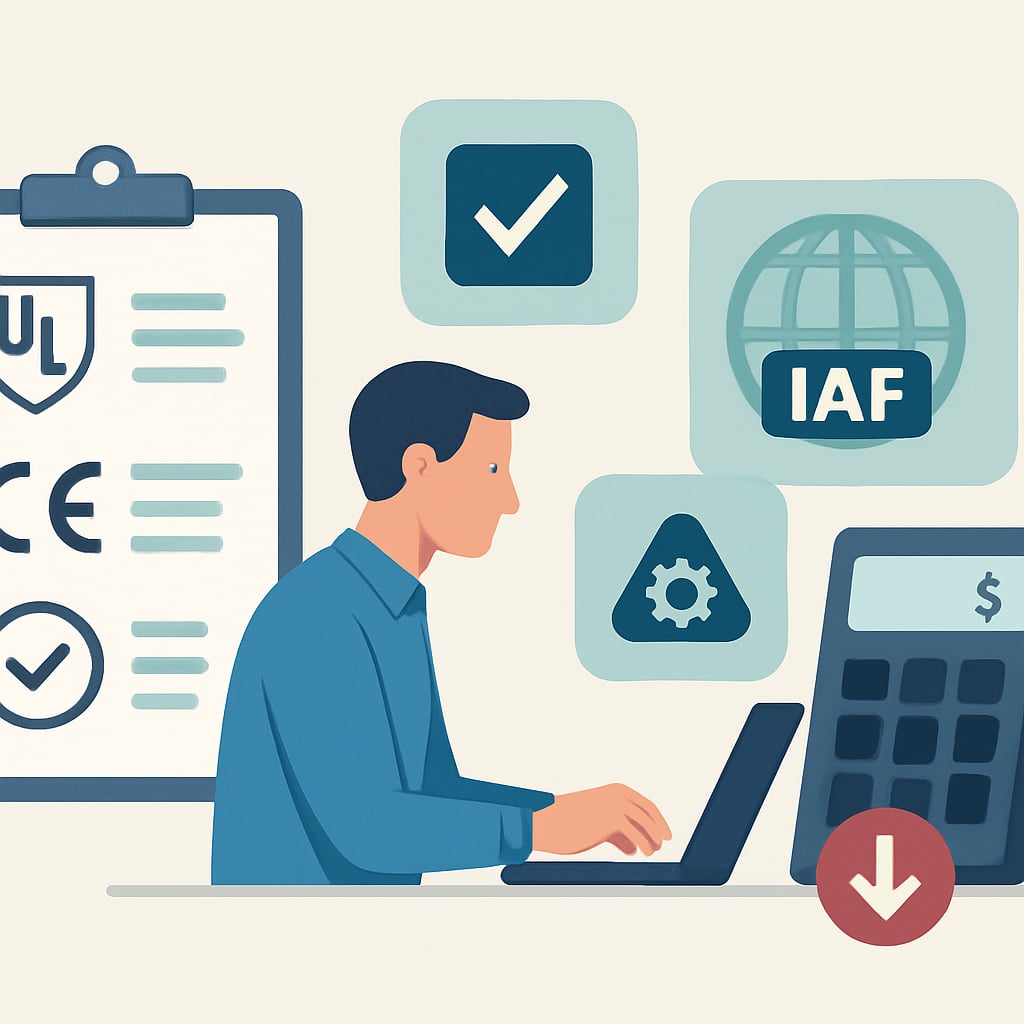
For straw machine manufacturers, certifications fall into three primary categories, each serving distinct market and operational needs. Safety certifications, such as UL (Underwriters Laboratories) for North America or CE marking for the European Union, verify that your machine meets essential health and safety standards—a non-negotiable for market access. Quality certifications, like ISO 9001, focus on your manufacturing processes and consistency, which can enhance trust with beverage company clients. Environmental certifications, including ISO 14001, demonstrate your commitment to sustainable practices, increasingly valued in the paper straw industry. According to industry reports, safety certifications are often prioritized for regulatory compliance, while quality and environmental certifications are viewed as competitive advantages. However, a 2023 survey of packaging manufacturers suggested that integrating all three types can create a robust value proposition. My analysis: For most manufacturers, starting with the mandatory safety certification for your target region is crucial, then layering on quality and environmental certifications based on client demands and strategic goals.
Evaluate Certification Bodies and Their Credibility
Not all certification bodies for straw machines hold equal weight. Their credibility is largely determined by accreditation from recognized organizations like the International Accreditation Forum (IAF) or its regional members (e.g., UKAS in the UK, ANAB in the US). An accredited body ensures the certification is internationally recognized, which is vital for global export. Some manufacturers prefer large, well-known certification bodies for their brand prestige, while others opt for smaller, niche auditors who may offer more specialized knowledge in packaging machinery. From a practical standpoint, I recommend verifying accreditation status first, then assessing the body's specific experience with industrial or packaging equipment audits.
提示
When shortlisting certification bodies for straw machines, ask for client references—specifically from other straw or packaging machine manufacturers. Their firsthand experience with the audit process and feedback on the auditor's industry knowledge can make a significant difference in selecting a partner that understands your technical context.
Compare Costs, Timelines, and Maintenance Requirements
A thorough cost comparison for certification bodies is essential, as expenses extend beyond the initial application fee. Total costs typically include pre-audit consultations, the main audit (which involves auditor travel and time), and annual surveillance or renewal charges to maintain the certification. Timelines can vary: some bodies offer expedited processes at a premium, while standard routes may take several months. Maintenance requirements also differ; for instance, ISO standards often require annual surveillance audits and a full recertification every three years. Based on experience, I recommend creating a detailed spreadsheet that maps out all costs and timelines over a 3-5 year period for each shortlisted body. This will help you avoid unexpected financial burdens and plan your resource allocation effectively.
In summary, researching certification bodies for straw machines requires a balanced evaluation of certification types, auditor credibility, and long-term operational costs. This careful comparison ensures you select a partner that aligns with your compliance needs and business strategy.
Step 3: Implement the Selection and Application Process

This phase transforms your research into action, ensuring your straw machine meets certification body requirements efficiently. A structured approach minimizes delays and costs while maximizing compliance success.
Develop a Certification Selection Checklist
Creating a weighted scoring system is essential for objectively comparing certification bodies for straw machines. According to industry consultants like Manufacturing Compliance Group, a checklist should prioritize factors like audit frequency, geographic coverage, and recognition by beverage brands. However, ISO-focused bodies like TÜV SÜD emphasize technical standards alignment over commercial recognition. My analysis: For manufacturers targeting global markets, I recommend weighting technical alignment (e.g., ISO 22000 for food safety) at 40%, brand recognition at 30%, and cost/timeline at 30%. This balances compliance with market access needs.
Prepare Required Documentation and Technical Files
Certification bodies for straw machines require comprehensive documentation. European bodies like Bureau Veritas typically demand detailed machine manuals, technical drawings proving material safety (especially for paper straws), and material safety data sheets (MSDS). In contrast, some Asian bodies may accept summarized versions initially. From a practical standpoint, compile everything upfront: include quality control procedures, maintenance records, and employee training logs. I recommend creating a master file with indexed sections for each certification body's requirements, as this streamlines audits for multiple certifications.
Schedule and Prepare for the Certification Audit
Audit preparation is critical. Certification bodies like SGS recommend internal pre-audits to identify compliance gaps before the official assessment. However, some manufacturers rely solely on consultant reviews, which can miss operational nuances. My analysis: Conduct at least two internal pre-audits—one focused on documentation (e.g., technical files) and another on machine operation and safety protocols. For beverage companies, I recommend involving production staff in mock audits to ensure practical adherence. Address gaps like incomplete MSDS or unclear quality control procedures promptly, as these are common fail points with certification bodies for straw machines.
In conclusion, this process requires balancing detailed preparation with strategic prioritization. By implementing a weighted checklist, thorough documentation, and proactive audit preparation, you can efficiently navigate certification requirements. Next, we'll explore maintaining certifications post-approval.
總結
Selecting the appropriate certification for your straw machine is a strategic decision that directly impacts market access, product credibility, and operational efficiency. As outlined in this guide, a methodical, three-step approach—beginning with a thorough assessment of your specific business needs and machine specifications, followed by diligent research into the various certification bodies for straw machines, and culminating in a structured selection and application process—is paramount. This pathway ensures your equipment not only complies with essential regulatory and safety standards but also aligns with and actively supports your broader commercial goals.
By taking a proactive and informed approach to certification, you transform a compliance necessity into a competitive advantage. To begin this critical process with clarity and confidence, we encourage you to start your certification journey today by downloading our free certification assessment template. This practical tool will help you systematically evaluate your straw machine's requirements against the available certification options, setting a solid foundation for your next steps.
常見問題
1. What are the main certification bodies for straw machines, and how do they differ?
The primary certification bodies for straw machines include NSF International, UL (Underwriters Laboratories), and CE marking for the European market. NSF focuses on public health and safety standards for food equipment, UL emphasizes electrical safety and performance, while CE indicates compliance with EU health, safety, and environmental directives. Choosing between them depends on your target market and whether you prioritize food safety (NSF), electrical certification (UL), or European market access (CE).
2. How do I determine which certification is mandatory versus optional for my straw machine?
Mandatory certifications are typically dictated by your target market's regulations. For instance, selling in the US may require NSF/ANSI 18 or UL standards for commercial use, while the EU mandates CE marking. Optional certifications, like additional hygiene or energy efficiency marks, can provide competitive advantages. Consult local regulatory agencies or a certification expert to map requirements based on your machine's specifications, intended use, and the countries where you plan to operate or export.
3. What is the typical process and timeline for obtaining certification from these bodies?
The process generally involves: 1) Pre-assessment to review your machine against standards, 2) Formal application submission with technical documentation, 3) Product testing and evaluation at an accredited lab, 4) Facility audit if required, and 5) Final review and certification issuance. Timelines vary from 3 to 12 months, depending on the body (e.g., NSF may take 4-6 months, UL 6-9 months) and your machine's complexity. Proactively preparing documentation and addressing design gaps early can streamline this timeline significantly.
4. How can certification impact the marketability and cost of my straw machine?
Certification enhances marketability by assuring customers of safety, quality, and regulatory compliance, which is crucial for manufacturers and beverage companies sourcing equipment. It can justify premium pricing and expand access to regulated markets. However, costs include application fees, testing expenses, and potential design modifications, often ranging from $5,000 to $50,000+. Weigh these against long-term benefits like reduced liability, increased sales, and stronger brand trust in competitive industries.